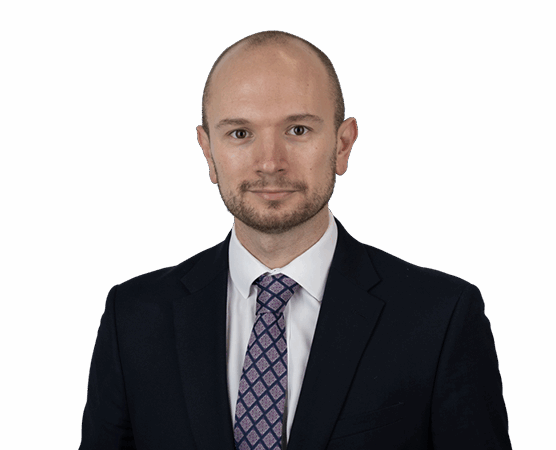
Charles is an experienced junior with a diverse practice which spans serious and general crime, financial crime and sanctions, public law, human rights law, protest law and professional discipline.  His practice brings him before the Crown Court, the Magistrates’ Court, the High Court, the Court of Appeal and disciplinary tribunals.

Charles undertook a Judicial Assistantship at the UK Supreme Court during the 2020-2021 legal year, working for Lord Hamblen of Kersey.

Past instructions include the following:

  • Represented the first named defendant as sole Counsel in a nine-handed protest-related trial where the defendants were charged with conspiring to commit a public nuisance at Heathrow airport. The trial finished during its seventh week and was prosecuted by Senior Treasury Counsel. Subsequent appeal to the Court of Appeal concerning jury irregularity (led by Rachel Scott KC).
  • Represented a former police officer accused of offences of voyeurism in a Crown Court trial prosecuted by Senior Treasury Counsel.
  • An appeal to the Divisional Court (Lady Carr LCJ & Saini J) concerning the application of the offence of sending “grossly offensive” messages on a public electronic communications network, contrary to section 127 of the Communications Act 2003, to private and consensual messaging: Cobban & Borders v DPP [2024] EWHC 1908 (Admin). Led by Nicholas Yeo.
  • Acted for Nikita Mazepin, former Formula 1 racing driver, in applying for interim relief in proceedings brought under section 38 of the Sanctions and Anti-Money Laundering Act 2018: Mazepin v Secretary of State for Foreign, Commonwealth and Development Affairs [2023] EWHC 1777 (Admin). Led by Hugo Keith KC and Rachel Scott.
  • Defending in cases before the Crown Court involving allegations of serious violence, organised crime and sexual offending.
  • Advising on various matters, including the application of article 3 ECHR to prison conditions (led), potential liability for a corruption-related offence in a foreign jurisdiction (led), a potential private prosecution (led) and data- protection implications arising out of a search and seizure following an MLA request (sole Counsel).

Legal Expertise

Crime overview

Charles has a broad criminal practice, encompassing serious and general criminal matters (including sexual and violent offences) and more specialist human-rights focussed areas, such as protest-related offences and communications offences.

Charles is an experienced advocated, having defended (as sole Counsel) in cases prosecuted by Senior Treasury Counsel. He has also appeared successfully in the Court of Appeal (Criminal Division).

He has significant experience of defending in matters across the general spectrum of criminal cases, including cases involving allegations of serious violence, serious sexual offending, drug offences, perverting the course of justice, and driving offences.

Beyond serious and general crime, he has developed a particular specialism in defending individuals in criminal cases which include human rights and/or public law-related issues. This includes alleged offending arising from protest activity and speech-related conducting.

He also has significant experience of advisory work in criminal litigation, including advice on a potential private prosecution (led by Hugo Keith KC), advice a high-profile individual on a matter relating to an oversees jurisdiction (led by Hugo Keith KC) and the risk of incurring criminal liability under the 2019 Russian Sanctions Regulations (led by Hugo Keith KC and Rachel Scott).

Previous instructions include the following:

  • Represented the first-named defendant in a nine-handed protest-related conspiracy trial before a jury in the Crown Court. The trial finished during its seventh week and was prosecuted by Senior Treasury Counsel.
  • Represented a former police officer accused of offences of voyeurism in a jury trial in the Crown Court and on appeal against sentence to the Court of Appeal. The trial was prosecuted by Senior Treasury Counsel.
  • Represented a youth charged in relation to a “joint enterprise” stabbing.
  • Represented a defendant charged with arson intent to endanger life and blackmail.
  • Representing a defendant charged with multiple sexual offences, including assault by penetration of a child.
  • Representing a defendant charged in an eight-handed conspiracy to supply Class A drugs.
  • An appeal by way of case stated to the Divisional Court (Lady Carr LCJ & Saini J) concerning the application of the offence of sending “grossly offensive” messages, contrary to section 127 of the Communications Act 2003, to private and consensual messaging: Cobban & Borders v DPP [2024] EWHC 1908 (Admin). Led by Nicholas Yeo.

Notable Crime cases

R v H and others [2026] EWCA Crim 706

Represented the first named defendant as sole Counsel in a nine-handed protest-related trial where the defendants were charged with conspiring to commit a public nuisance at Heathrow airport. The trial finished during its seventh week and was prosecuted by Senior Treasury Counsel. Subsequent appeal to the Court of Appeal concerning jury irregularity (led by Rachel Scott KC).

R v C (Court of Appeal, unreported)

Successfully appealed a sentence to the Court of Appeal following a trial (in which Charles also acted) at Southwark Crown Court, where a former police officer was convicted of offences of voyeurism. The trial was prosecuted by Senior Treasury Counsel.

R v M (Central Criminal Court)

Represented a man against whom contempt proceedings were brought after he lunged at the defendant in a murder trial, where the defendant was accused of murdering the man’s sister. The man received a fine.

C&B v Director of Public Prosecutions (High Court) - [2024] EWHC 1908 (Admin)

Appeal by way of case stated. Leading case on the application of section 123 of the Communications Act 2003 (the offence of sending grossly offensive etc. messages on a public electronic communications network) to private and consensual messaging, Led By Nicholas Yeo.

R v H (Bournemouth Crown Court)

Represented a defendant charged with offences relating to an altercation with men at the bar at which the defendant was working as a door man. One of the men fractured his skull which led to a serious brain injury. Successful submission of no case to answer on two counts of affray. Acquittal of an assault occasioning actual bodily harm. Suspended sentence secured following a single conviction of inflicting grievous bodily harm (s.20 OAPA 1861) relating to the punch which led to the fractured skull and brain injury.

R v S (Newcastle Crown Court)

Represented a defendant charged with blackmail and arson with intent to endanger life. No evidence offered on first day of trial.

R v X (Highbury Corner Youth Court)

Represented a youth charged on a “joint enterprise” basis in relation to the stabbing of a man in a park. Following discussion, the Crown offered no evidence on the day of trial after a plea was entered by a co-defendant.

R v M (Wood Green Crown Court)

Secured the acquittal of a defendant charged with two counts of sexual assault, both of which were alleged to have taken place when the defendant was a serving police officer.

R v H (Bournemouth Crown Court)

Representing a defendant due to be sentenced for nine firearms and ammunition offences, seven of which engaged the mandatory minimum term of 5 years’ imprisonment. The case involved expert reports from a forensic psychiatrist and forensic psychologist. The court was persuaded that there were exceptional circumstances that justified not imposing the mandatory minimum sentence.

R v C (Snaresbrook Crown Court)

Secured the acquittal of a defendant charged with assault occasioning actual bodily harm.

R v O (Bournemouth Crown Court)

Represented a defendant charged with assault occasioning actual bodily harm. Following an abuse of process application relating to the police’s investigative failings and the application of the CPS’s key documents on racist and religious hate crimes and obligations arising under article 8 ECHR, and a trial in which live evidence was given by 3 prosecution witnesses, the defendant and his wife, the jury, after just over 90 minutes, returned a not guilty verdict.

R v S (Westminster Magistrates’ Court)

Represented a police officer charged with common assault relating to an altercation in a bar. The defendant was acquitted at trial by a District Judge.

R v G (Southwark Crown Court, sitting at Prospero House)

Represented a defendant at trial who was charged with perverting the course of justice and theft, relating to his conduct as a police officer.

R v G (Croydon Crown Court)

Represented a defendant charged with assault occasioning actual bodily harm. Following a guilty plea, the case moved to a Newton hearing which involved complex legal argument on the res gestae doctrine. The Newton hearing was resolved in the defendant’s favour and the court passed a suspended sentence.

R v Y (Croydon Youth Court)

Represented a youth charged with two offences, one of which was a summary-only public order offence. After legal argument on the approach to counting the 6-month time limit under s.127 of the Magistrates’ Court Act 1980, the Court accepted that the public order matter was time-barred.

Human Rights and Public Law overview

Charles has developed a particular expertise in cases where human rights and/or public law-related issues arise within the context of criminal proceedings or the criminal justice system more broadly.

Previous or current instructions include the following:

  • An appeal to the Divisional Court (Lady Carr LCJ & Saini J) concerning the application of the offence of sending “grossly offensive” messages on a public electronic communications network, contrary to section 127 of the Communications Act 2003, to private and consensual messaging: Cobban & Borders v DPP [2024] EWHC 1908 (Admin (led by Nicholas Yeo).
  • An application to intervene in the Court of Appeal in R (Ammori) v SSHD, the judicial review proceedings in which the proscription of Palestine Action was being challenged (led by Rachel Scott KC).
  • Applying to the Supreme Court for permission to appeal in judicial review proceedings relating to the lawfulness of a search warrant within the context of mutual legal assistance (led by Clair Dobbin KC).
  • Representing the first-named defendant in a nine-handed protest-related conspiracy trial before a jury in the Crown Court. The trial, which finished in its seventh week, included complex legal argument involving the application of articles 10 and 11 ECHR. The case was prosecuted by Senior Treasury Counsel.

Given Charles’ practices in both protest law and sanctions, he is very well placed to advised and act in cases involving issues relating to the European Convention on Human Rights and other ‘traditional’ public law principles and concepts.

He has experience of advising on public law-related issues in a number of different contexts, including the application of article 3 ECHR to the context of prison conditions (as Junior Counsel), the application of judicial review principles within the contexts of sanctions and SIAC proceedings (both as Junior Counsel) and, on his own, the data-protection implications arising out of a search and seizure following an MLA request. He also has experience of public inquiry work, having been instructed as Junior Counsel by a Core Participant in the Grenfell Tower Inquiry to assist with the preparation of Rule 9 statements.

Whilst working as a Judicial Assistant at the Supreme Court, Charles worked on appeals involving complex points of law across a wide range of different legal contexts. In particular, he worked on a number of high profile cases which concerned human rights and/or public law issues, including: R (KBR Inc) v Director of the SFO [2021] UKSC 2 (territorial scope of SFO’s investigatory powers); DPP v Ziegler [2021] UKSC 23 (appeal by way of case stated arising from protest activity); and Maduro Board of the Central Bank of Venezuela v Guaidó Board of the Central Bank of Venezuela [2021] UKSC 57 (recognition of a foreign head of state and act of state doctrine).

Protest Law overview

Charles has developed a particular specialism in protest cases, having worked on the case of DPP v Ziegler [2021] UKSC 23 in his capacity as a Judicial Assistant at the Supreme Court. Given his practice which spans both criminal and public law, Charles is particularly well-placed to advise and represent defendants on application of articles 9, 10 and 11 of the European Convention on Human Rights to cases relating to protests.

His protest practice involves proceedings in both Magistrates’ and Crown Courts and cases in which there is significant media interest. Charles has significant experience of representing defendants charged with a wide range of protest-related offences, including obstructing the highway, interfering with national infrastructure, aggravated trespass, criminal damage, public nuisance, tampering with a motor vehicle and breaching a condition imposed under section 14 of the Public Order Act 1986.

Current and/or previous instructions include: applying to intervene in the Palestine Action judicial review proceedings before the Court of Appeal (led by Rachel Scott KC); defending the first-named defendant in a nine-handed protest-related conspiracy trial before a jury in the Crown Court prosecuted by Senior Treasury Counsel; defending in a case of alleged criminal damage to the building of the Labour Party Headquarters; defending in case of alleged criminal damage to the Ministry of Defence building being prosecuted by Senior Counsel.

Notable Protest Law cases

R v H and others [2026] EWCA Crim 706

Represented the first named defendant as sole Counsel in a nine-handed protest-related trial where the defendants were charged with conspiring to commit a public nuisance at Heathrow airport. The trial finished during its seventh week and was prosecuted by Senior Treasury Counsel. Subsequent appeal to the Court of Appeal concerning jury irregularity (led by Rachel Scott KC).

R v C, D and others (Westminster Magistrates’ Court)

Represented two of five defendants charged with tampering with a motor vehicle during an Extinction Rebellion protest. The court accepted a half-time submission that the defendants had not tampered with a motor vehicle, within the meaning of the provision, as the conduct relied upon by the prosecution concerned the detachable trailer of the tanker, as opposed to the cab itself.

(R v H) Westminster Magistrates' Court/City of London Magistrates' Court

Represented a defendant charged with breaching a condition imposed by a senior officer contrary to section 14 of the Public Order Act 1986 in relation to an Extinction Rebellion protest at Oxford Circus. At the close of the prosecution case, which involved cross-examination of a Chief Superintendent, the court accepted a half-time submission that the condition which was imposed was unlawful as the prohibited area which protestors were instructed to leave had no specific end point and was thus insufficiently certain.

Financial Crime, Sanctions & Proceeds of Crime overview

Charles practices in financial crime and, in particular, sanctions and the proceeds of crime. He is currently on the Serious Fraud Office Prosecution and Proceeds of Crime panels (both C panel).

Charles has developed a specialist sanctions practice, with a particular focus on the Russian sanctions regime. Charles has been instructed in a number of confidential, high-profile matters.

Charles is the co-author (with Amanda Pinto KC) of “Human Rights Sanctions” in UK Sanctions Law and Practice (Oxford University Press, 2026).

Charles’ experience spans the range of sanctions work. This includes the regulatory sphere (i.e. advising on licence applications), the criminal sphere (i.e. advising on the risks of criminal liability under the Russian sanctions’ regulations) and the public law sphere (i.e. advising on potential grounds for challenging designation).

Charles acted for Nikita Mazepin in applying for interim relief in proceedings brought under section 38 of the Sanctions and Anti-Money Laundering Act 2018, led by Hugo Keith KC and Rachel Scott. (Mazepin v FCDA [2023] EWHC 1777 (Admin).

Charles’s experience includes:

  • Advising a client in a dispute with a bank following the restriction of an account on the basis of, amongst other things, sanctions-related concerns (as Junior Counsel);
  • Advising on the relationship between the obligation to report sanctions-related breaches and legal professional privilege (as Junior Counsel);
  • Drafting grounds of challenge to a designation in proceedings before the High Court under section 38 of the Sanctions and Anti-Money Laundering Act 2018 (as Junior Counsel);
  • Drafting applications to the Secretary of State to revoke designation requests under section 23 of the Sanctions and Anti-Money Laundering Act 2018 (as Junior Counsel);
  • Advising on potential criminal liability under the Russian sanctions’ regulations, including issues relating to the scope of territorial jurisdiction (as Junior Counsel);
  • Advising on licence applications and compliance reporting to OFSI (as Junior Counsel).

In addition to his sanctions practice, Charles acts in Account Freezing and Account Forfeiture proceedings. His experience includes successfully securing Freezing Orders for a police force in respect of two accounts which together contained over £1,000,000, where the respondent was represented by Senior Counsel, contested account and cash forfeiture proceedings which included live evidence from seven witnesses, and a successful application to intervene in and adjourn financial remedy proceedings in a family court pending an ongoing civil recovery investigation.

Whilst working as a Judicial Assistant at the Supreme Court, Charles worked on the landmark case of R (KBR Inc) v Director of the SFO [2021] UKSC 2, which concerned territorial scope of SFO’s investigatory powers.

Notable Financial Crime, Sanctions & Proceeds of Crime cases

Mazepin v Secretary of State for Foreign, Commonwealth and Development Affairs) [2023] EWHC 1777 (Admin)

Acted for Nikita Mazepin, former Formula 1 racing driver in applying for interim relief in proceedings brought under section 38 of the Sanctions and Anti-Money Laundering Act 2018 (led by Hugo Keith KC and Rachel Scott).

O

Successfully applied on behalf of the CPS to intervene in and adjourn financial remedy proceedings in a family court pending an ongoing civil recovery investigation.

ES

Representing a police force in Account Forfeiture and Cash Forfeiture proceedings. The contested hearing heard live evidence from 7 individuals.

GU

Represented a police force in Account Forfeiture proceedings relating to two accounts totalling over £100,000, having successfully applied to extend the Freezing Orders already in place.

D

Successfully secured Freezing Orders for a police force in respect of two accounts totalling over £1,000,000. Senior Counsel appeared for the respondent.

Professional Discipline

Professional Discipline overview

Charles has developed a significant professional disciplinary practice with a particular focus on police misconduct proceedings. This work is complemented by his criminal practice, where he has significant experience of defending police (former and current) charged with criminal offences.

His police misconduct practice includes both defence work and presenting cases on behalf of police forces.  In addition to police misconduct, he also has experience of regulatory proceedings relating to the teaching professional; he is currently on the Teaching Regulatory Authority’s panel of Presenting Officers.

Notable Professional Discipline cases

F v GC

Represented an officer in gross misconduct proceedings facing allegations which included dishonesty in relation to the conduct of an investigation into alleged domestic abuse.

M v TVP

Represented an officer in gross misconduct proceedings facing an allegation of dishonesty following a road traffic collision. Live evidence was heard from two expert witnesses (a telematics consultant, on the one hand, and an accident investigation consultant and vehicle examiner, on the other).

M v MPS

Represented an officer in gross misconduct proceedings facing allegations of sexual assault and pursuit of an inappropriate course of conduct against one complainant and harassment against another. After a hearing which spanned five days, during which the panel heard live evidence from six witnesses plus the officer, all allegations were found not proved.

B v MPS

Represented an officer in gross misconduct proceedings for possessing anabolic steroids at a police station.

H v MDP

Presented a case on behalf of the Ministry of Defence Police against a firearms officer facing a domestic-related allegation.

H v MPS

Represented a police sergeant facing an allegation of gross misconduct relating to a message sent on WhatsApp to a group of officers. The officer was not dismissed (but his rank was reduced).

H v TRA

Presented a case on behalf of the Teacher’s Regulatory Authority against a teacher who faced allegations of dishonesty and displaying a lack of integrity relating to a job application. The allegations were proven (but the panel decided not to make a prohibition order).

B, W, S v Gwent Police

Junior Counsel to Matthew Butt KC representing Gwent Police in misconduct proceedings against senior officers. Two of the officers were dismissed without notice. A third officer gave notification of his intention to retire before the end of the hearing and the panel determined that he would have been dismissed had he not ceased to be a police officer.

Professional Memberships

  • Criminal Bar Association
  • Human Rights Lawyers Association
  • Young Fraud Lawyers Association
  • London Irish Lawyers Association
  • Defence Extradition Lawyers Association
  • LLM (University of Pennsylvania) – Distinction, 1st in year
  • MPhil in Criminology (Cambridge) – Distinction, 1st in year
  • GDL & BPTC (City University, London)
  • BA Hons in French and German (King’s College London) – First Class 

Scholarships and prizes

  • Karen Iest Award for Excellence in the LLM (University of Pennsylvania, 2019)
  • Manuel Lopez-Rey Prize for Criminology (Cambridge, 2018)
  • Thouron LLM Scholarship (Thouron Award, 2018)
  • Newton MPhil Scholarship (Cambridge, 2017)
  • British Academy of Forensic Sciences Prize for Advanced Criminal Litigation (City, 2017)
  • Paul Methven Scholarship (Inner Temple, 2016)
  • Exhibition Award (Inner Temple, 2016)
  • Exhibition Award (Inner Temple, 2015)
  • Formal Commendation for Citizenship and Endeavour (KCL French Dept, 2015)
  • Formal Commendation for Academic Achievement (KCL French Dept, 2013)
  • “Human Rights Sanctions” in UK Sanctions Law and Practice, Oxford University Press, 2026 (co-written with Amanda Pinto KC).
  • “R (KBR, Inc) v Director of the Serious Fraud Office: The Principle of International Comity and Extra-Territorial Effect.” YFLA Newsletter, February 2021.
  • “Exploring the impact of Council of Europe institutions through a cross jurisdictional collaboration.” Howard League for Penal Reform ECAN Bulletin, Issue 39, 2018 (co-authored with other members of the research project).
  • “Non-fatal Offences Against the Person: Complexities, Difficulties and Reform.” Queen Mary Law Journal, Volume 8, 2017.
  • SFO Prosecution Panel (C)
  • SFO POCA Panel (C)
  • Specialist Regulatory Panel (B)

Throughout his legal studies, Charles has been involved in a number of pro bono projects in different areas including prison law, criminal appeals, social security and education law. He intends to maintain his involvement in pro bono and other access-to-justice-related work whilst in practice.

Charles has developed a significant academic interest in criminal justice and public law. At Cambridge, Charles’ MPhil dissertation considered the relationship between harm, dangerousness, sentencing and probation. At Penn, his studies spanned constitutional law, criminal law, international human rights law and the ever-growing field of US law referred to as “crimmigration”, which seeks to understand the relationship between immigration law and criminal justice. Charles hopes to maintain this interest in academic law alongside his practice.

Outside of law, Charles has worked in politics in his native Northern Ireland, on a voluntary basis, with a particular interest in human rights, cross-community and constitutional issues.

I, Charles McCombe, am a data controller and can be contacted at 3 Raymond Buildings, Gray’s Inn, London WC1R 5BH or by telephone on 020 7400 6400 or by email at clerks@3rblaw.com.  My Data Protection Policy can be found here.

All personal data that I process is for the purposes of providing legal services, conducting conflict-checks, marketing, defending potential complaints, legal proceedings or fee disputes, keeping anti-money laundering records, training other barristers and pupils and when providing work-shadowing opportunities, and/or exercising a right to a lien.  The types of data that I process vary upon the nature of the legal matter in relation to which I am engaged to advise, but can include names, contact details, biographic details and ‘special category personal data’ (such as details of racial or ethnic origin, political opinions, religious or philosophical beliefs, health, sex life and criminal convictions and proceedings).

Depending upon the circumstances of the case, the legal bases upon which I process personal data are (i) the performance of a contract to which the data subject is a party or in order to take steps at the request of the data subject prior to entering into a contract, (ii) the processing is necessary to comply with legal obligations to which I am subject, or (iii) the processing is necessary for the legitimate interests set out above, except where such interests are overridden by the interests or fundamental rights and freedoms of the data subjects which require protection of personal data, in particular where the data subject is a child.  When I rely on (iii) legitimate interests, my ‘Legitimate Interests Assessment’ can be found here.  When I process data which has not be obtained directly from the data subject (e.g. personal data contained in evidential materials), it will have been supplied to me as part of my instructions in circumstances covered by legal professional privilege.

Depending upon the circumstances of the case, I may share the personal data with:

  1. my Chambers, which supplies professional and administrative support to my practice;
  2. Courts and other tribunals to whom documents are presented;
  3. my lay and professional clients;
  4. potential witnesses, in particular experts, and friends or family of the data subject;
  5. solicitors, barristers, pupils, mini pupils and other legal representatives;
  6. ombudsmen and regulatory authorities;
  7. current, past or prospective employers;
  8. education and examining bodies;
  9. business associates, professional advisers and trade bodies.

I retain personal data for no longer than seven years after the case has come to an end or as otherwise required by law.

I do not intend to transfer data to any country which is not either within the European Union, ‘white listed’ by the EU or otherwise permitted by EU law (e.g. to the USA under the provisions of the ‘Privacy Shield’).

Under the UK GDPR, data subjects whose personal data I process have the right to request from me access to, and rectification or erasure of, their personal data, the right to the restriction of processing concerning them, the right to object to processing as well as the right to data portability.  Data subjects also have the right to lodge a complaint.  Three Raymond Buildings has a data protection complaints procedure which applies to chambers and its barristers.  You can find a copy of our procedure here.

In cases where there is a contract between me and the data subject, the provision of personal data is a contractual requirement and the data subject is obliged to provide the personal data in order that I can supply legal services.  A failure to provide such data may mean that I will not be able to provide the legal services.

Rev 2.2 – 09.07.2026

Data Protection Policy

Legitimate Interests Assessment

Related news